Skip to lesson content
Island RiderUrban RiderMOTORCYCLE TRAINING · VICTORIASee dates ↗
Beginner guide No experience assumed

Motorcycle shifting,
made simple.

If “clutch,” “first gear,” and “friction zone” sound like another language, start here. We’ll build the whole idea from zero - one control, one click, and one smooth release at a time.

LHLeft hand: clutchLFLeft foot: gears
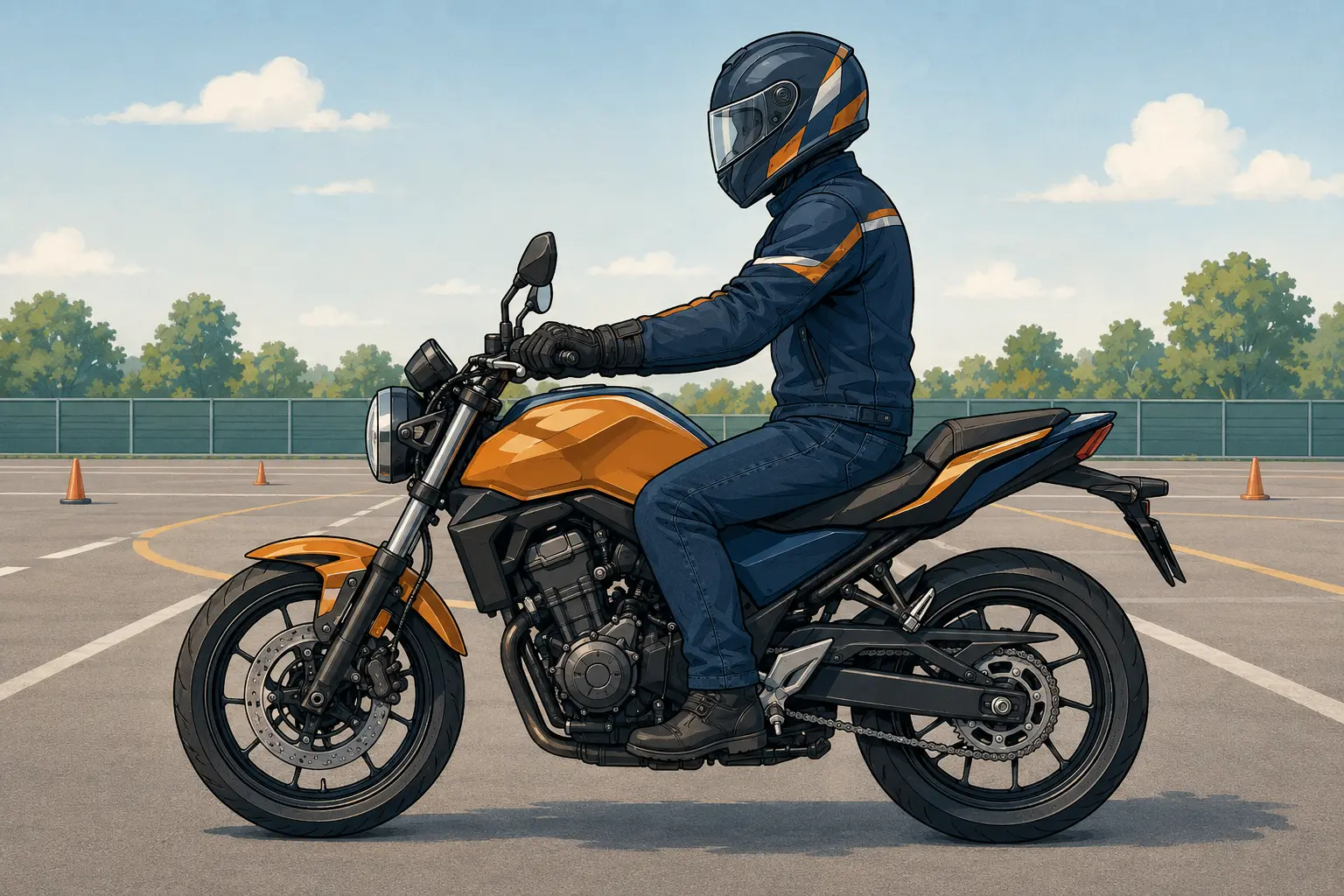
A learner on a motorcycle with their left hand on the clutch and left boot near the gear shifter
1 clutch lever
2 shift lever
Both shifting controls are on your left side.
01

Meet the controls

Two body parts work as a team

You do not change gears with your hands. Your left hand prepares the bike; your left foot chooses the gear.

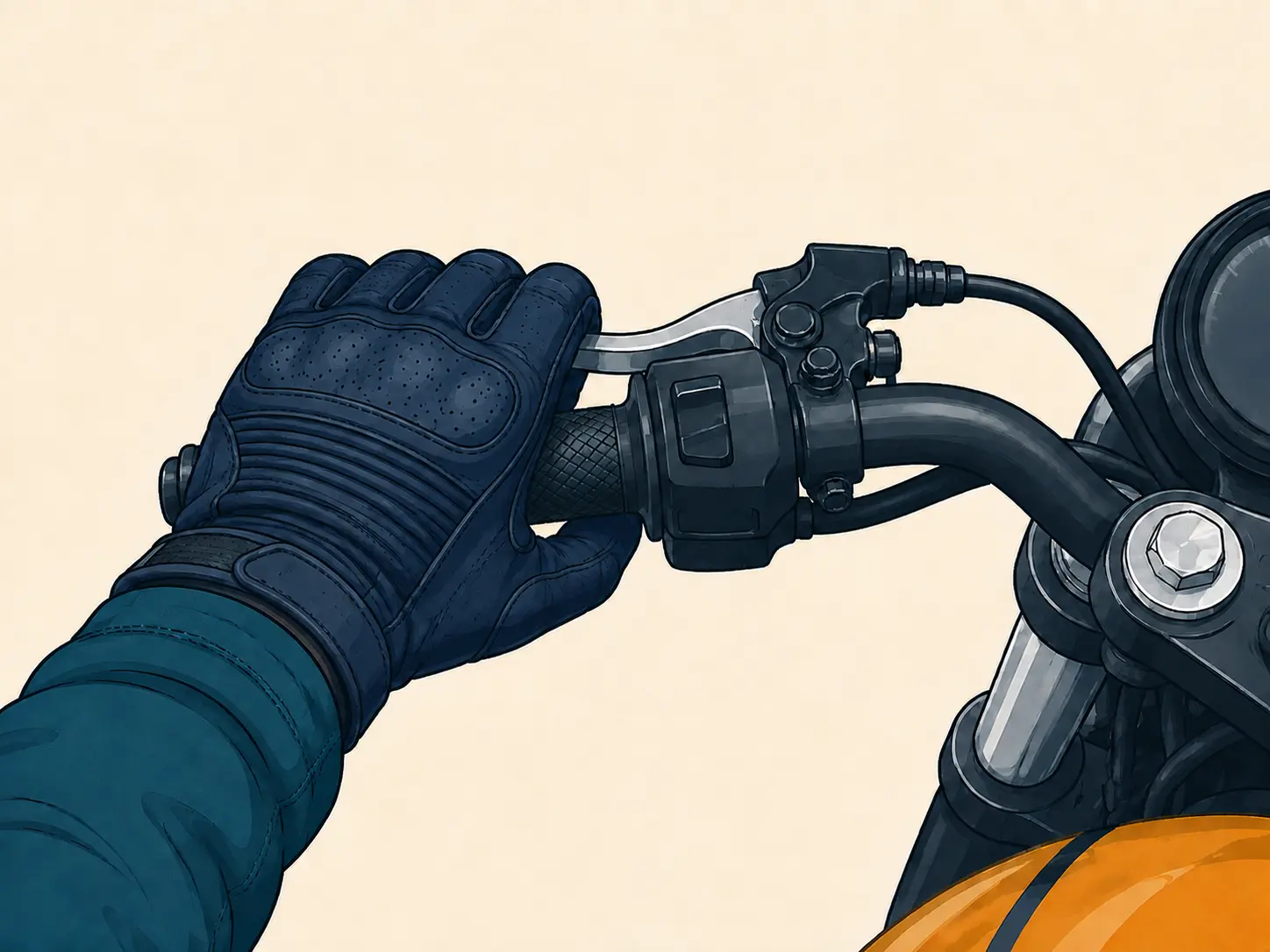
A gloved left hand squeezing a motorcycle clutch leverLeft hand
The clutch lever

Squeeze to disconnect power

The clutch lever is the long lever in front of the left handlebar grip. Pull it toward the grip with your fingers.

  • In Squeeze the lever toward the grip
  • Out Let the lever move away from the grip
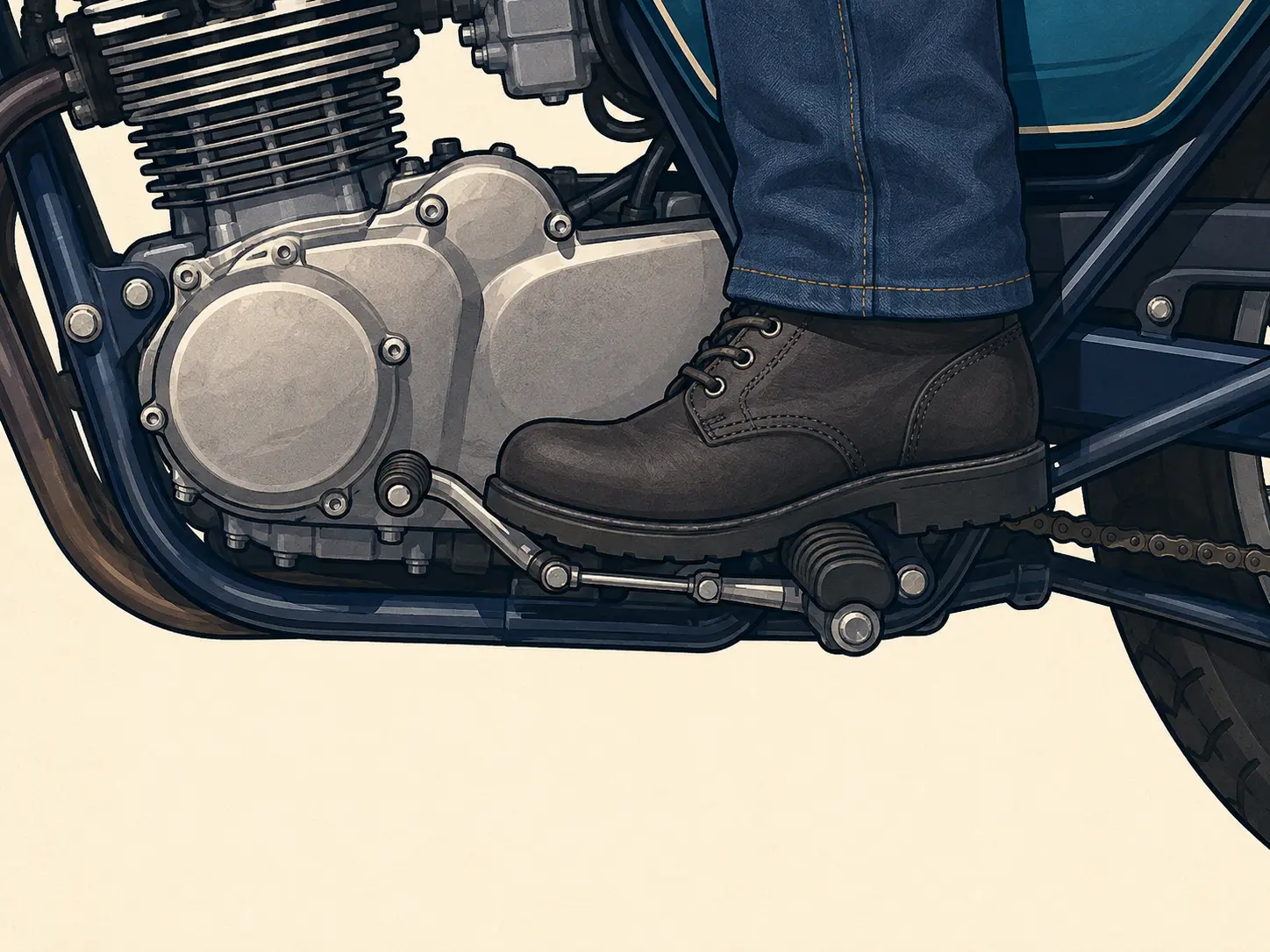
A rider's left boot beside the motorcycle gear shift lever and foot pegLeft foot
The shift lever

Press down or lift up one click

Look just in front of the left foot peg. The small metal lever with a rubber tip sits above your toe.

  • Down Press with the top of your boot
  • Up Hook your toe underneath and lift

Not the front brake: that lever is at your right hand.

Not the rear brake: that pedal is at your right foot.

02

What the clutch actually does

Think of it as a smooth power connector

The clutch sits between the engine and the gearbox. Its plates can connect, separate, or gently slip against each other.

Enginemakes power
Rear wheelreceives power
Interactive clutch

Clutch squeezed: power disconnected

The plates are separated. The engine can run without fully driving the rear wheel.

The friction zone is not one exact millimetre.It is the small range where the bike first begins to pull as you slowly release the lever.
03

The gear pattern

First is down. Everything else is up.

Most training motorcycles use this sequential pattern. The diagram shows six gears; a five-speed bike simply stops at five. You move through them in order - there is no H-pattern like a manual car.

6highest
5
4
3
2
Nhalf-click
1lowest
1↓

Find first gear

From neutral, squeeze the clutch and press the lever all the way down once.

N½

Find neutral

From first, give the lever a gentle half-lift. From second, give it a gentle half-press. Confirm the green N light.

2↑

Move into higher gears

From first, one firm lift selects second. Each additional full lift selects the next gear.

↩

Let the lever reset

After every press or lift, relax your foot so the spring-loaded lever returns to centre.

Why doesn’t a normal shift land in neutral?

Neutral occupies a small half-step. A firm, full movement normally passes through it when you shift between first and second.

Try it without a motorcycle

Tap through the shift pattern

Squeeze the pretend clutch, then use full clicks or a gentle half-click. The simulator starts in neutral.

Tip A real shift lever always returns to its centre position. The selected gear stays engaged.
Current gear
NNeutral

Neutral selected. Press down once to choose first gear.

04

Why gears exist

The engine has a comfortable working range

Gears let the engine stay useful while the motorcycle moves at very different speeds - like choosing easier or harder gears on a bicycle.

01

Too low

The engine may shudder, labour, or stall. This is sometimes called lugging.

Choose a lower gear
02

Comfortable

The engine responds smoothly without sounding strained or frantic.

Stay in this range
03

Too high

The engine gets loud and busy. If you need more road speed, choose a higher gear.

Shift up
Moving off1st gear

Strong pulling power for starting.

Speed increasingShift up

Keeps the engine from revving too high.

Slowing downShift down

Prepares the bike for the lower speed.

Coming to a stopReturn to 1st

Ready to move again when safe.

05

The four useful routines

Slow is smooth. Smooth becomes automatic.

These are simplified beginner sequences. Your instructor will adjust the timing for the motorcycle and the situation.

01

From stopped

Move away in first

  1. Squeeze

    Pull the clutch lever all the way in.

  2. Select

    Press the shift lever down into first.

  3. Prepare

    Look ahead and add a small, steady amount of throttle.

  4. Blend

    Ease the clutch into the friction zone until the bike begins to pull.

  5. Release

    As the bike gains balance and speed, smoothly release the clutch the rest of the way.

02

When the engine gets busy

Shift up

Roll off→Squeeze→Lift→Release→Roll on

Ease off the throttle, squeeze the clutch, lift the shifter one full click, smoothly release the clutch, then gently roll the throttle back on.

03

As road speed falls

Shift down

Roll off + brake→Squeeze→Press→Release smoothly

Use the brakes to slow, squeeze the clutch, press the shifter down one click, then release the clutch progressively. A lower gear makes the engine turn faster, so a sudden release can make the bike jerk.

04

Finish organized

Come to a stop

  1. Slow

    Close the throttle and use both brakes smoothly.

  2. Clutch

    Squeeze the clutch before the engine begins to struggle.

  3. Downshift

    Return to first gear by the time you stop.

  4. Ready

    At a traffic stop, stay in first with the clutch squeezed so you can move if needed.

06

When it feels wrong

Four normal beginner problems

None of these means you “can’t ride.” They are coordination problems that improve with calm repetition.

01The engine stalls as I start

The clutch probably came out faster than the engine could accept. Reset, breathe, add a small steady throttle, and pause longer in the friction zone.

02The bike jumps during a shift

The clutch may have been released abruptly, or the throttle and road speed were not well matched. Slow the sequence down and make the clutch release progressive.

03I keep missing neutral

That half-step is intentionally small. Stop safely, keep the clutch squeezed, use a very gentle movement from first or second, and confirm the green N light.

04My shift lever feels stuck

First let the lever spring fully back to centre. On some stationary bikes, gently rolling the motorcycle a few centimetres can help the gears align. Never force the lever.

Three-question check

Ready for a tiny confidence test?

No scores, no pressure. Tap an answer and we’ll explain it.

01

Where is neutral on the usual motorcycle shift pattern?

02

What does squeezing the clutch lever do?

03

To make a normal upshift, your left toe…

The five-word memory aid

Squeeze. Click. Smoothly release.

Reading makes the controls understandable. Coaching and repetition make them feel natural.

Explore beginner training
ISLAND RIDER × URBAN RIDER

Choose your package.

Rider Foundations $917 ↗Complete Rider $1,287 ↗Signature Rider $3,800 ↗

Regular prices in CAD, plus 5% GST. Rider Foundations and Complete Rider have qualifying early-registration prices of $817 and $1,187, respectively. New registrations must be made before December 25, 2026 (Pacific time), with skills training starting before April 1, 2027. Both conditions apply; subject to availability. Existing confirmed bookings keep their agreed price.

Continue to Urban Rider’s secure booking system to choose your course dates and register.

Already riding? Explore advanced training →