Head + eyes
Look up and through
Turn your head early toward the destination. Looking down makes small wobbles feel bigger and steals planning time.

 MOTORCYCLE TRAINING · VICTORIASee dates ↗
Lesson 06 Walking pace without the wobble
Slow riding feels difficult because the motorcycle has less self-stability. The solution is not speed - it is coordinated clutch, throttle, rear brake, and vision.
Create stability on purpose
At walking pace, the engine can provide steady energy while the clutch meters it to the wheel and the rear brake adds gentle resistance. Vision tells the motorcycle where to go.
Turn your head early toward the destination. Looking down makes small wobbles feel bigger and steals planning time.
Hold a calm engine speed instead of repeatedly opening and closing the throttle. Stability likes consistency.
Use the friction zone to meter how much of that steady power reaches the rear wheel. Make tiny lever changes.
A gentle drag can settle speed and driveline movement. Avoid a sharp front-brake squeeze with the bars turned.
Interactive balance mixer
Toggle each input and watch the simplified motorcycle become more settled. The real controls are continuous, not on/off - this model helps you remember the jobs.
Straight lines, then wide turns
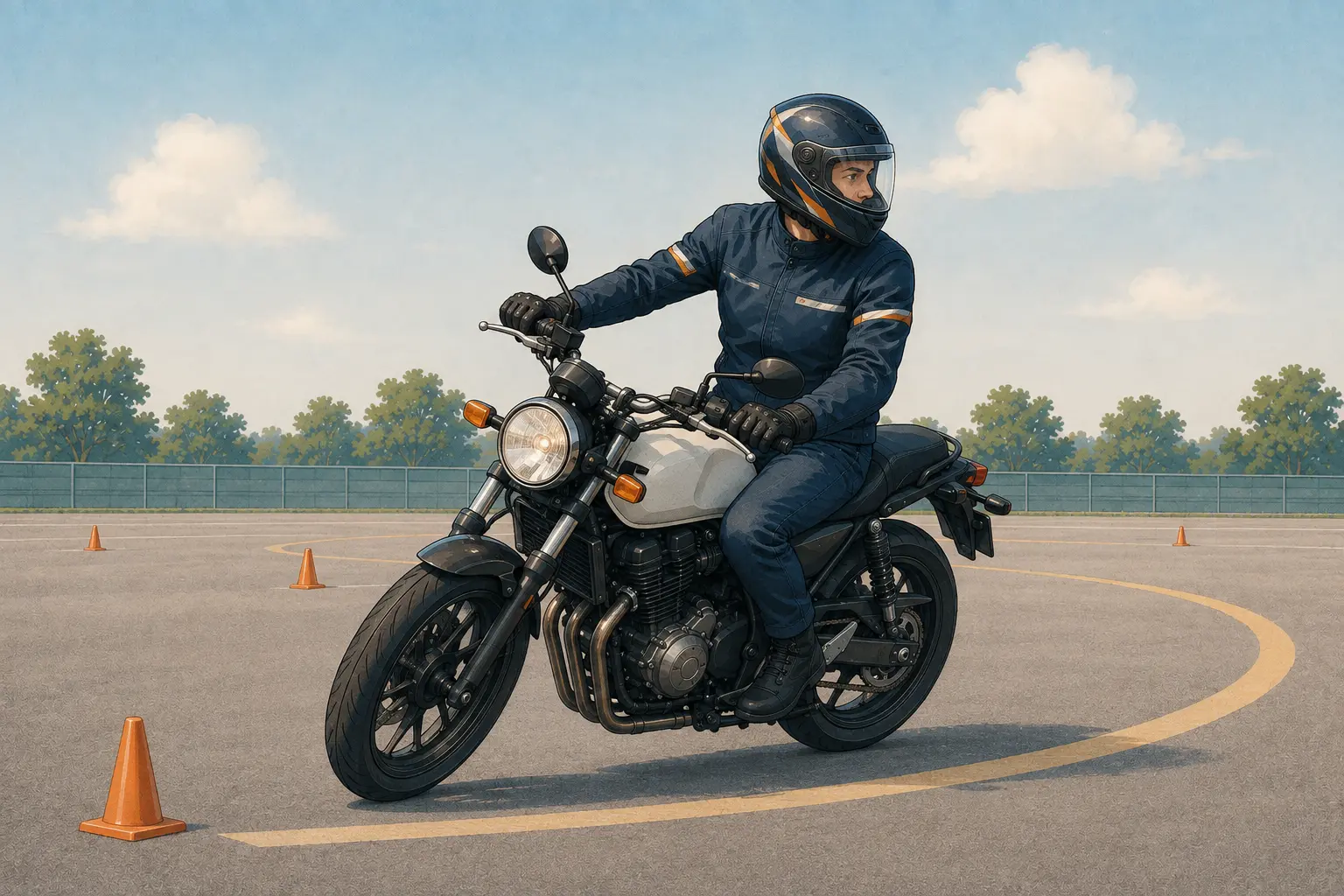
Do not begin with the smallest box. Build a slow straight line, then a wide circle, then gradually reduce the space with coaching.
Use first gear, a small steady throttle, and the clutch friction zone. Keep both feet ready but bring them to the pegs once balanced.
Use gentle pedal pressure to settle the motorcycle while the clutch continues metering drive.
For a straight line, choose a distant target. For a turn, rotate your head and chin toward the exit before the motorcycle reaches it.
At walking speed, turn the bars into the direction of the turn. Let your hands stay light enough to make small corrections.
Let the motorcycle lean slightly inward while your torso stays more upright or shifts a little toward the outside.
If balance disappears, straighten, clutch in, stop, and put a foot down. A reset is good practice, not failure.
Coach's notes
These are the details beginners often miss when they only memorize the steps.
At low speed, a little rear-wheel drive against light rear-brake resistance can make the motorcycle feel more settled and controllable.
Instead of chopping the throttle, keep the engine calm and use tiny clutch changes to adjust drive.
In a tight turn, keeping your body more upright allows the motorcycle to lean underneath while you maintain balance.
A sudden front-brake squeeze while the handlebars are turned can make the motorcycle tip quickly. Use the rear brake for fine slow-speed settling.
Troubleshooting
Use the symptom as feedback. Reset safely, change one thing, and try again.
Move your eyes farther ahead and turn your head toward the exit. Your balance system needs a stable visual reference.
Choose one small engine speed and hold it. Regulate drive with the friction zone instead of repeated wrist changes.
That removes the steady rear-wheel drive that was helping stability. Ease back into the friction zone unless you are deliberately stopping.
With the bars turned, abrupt front braking can tip the bike. Straighten and stop if needed; use light rear brake for fine speed control.
Enlarge the turn until you can keep the recipe consistent. Reduce the circle only after the wider version is calm and repeatable.
Three-question check
Tap an answer. The explanation appears immediately.
Slow-speed confidence comes from repeatable coordination, not from forcing the motorcycle through a tiny box.