Before the curve
Slow
Choose a safe entry speed while the motorcycle is upright. Finish major braking before you ask the tires to turn.

 MOTORCYCLE TRAINING · VICTORIASee dates ↗
Lesson 05 Where you look changes where you go
A motorcycle needs direction, speed control, and lean. Your vision organizes all three. Learn where to look, how a turn begins, and why staring at the problem makes it harder to avoid.
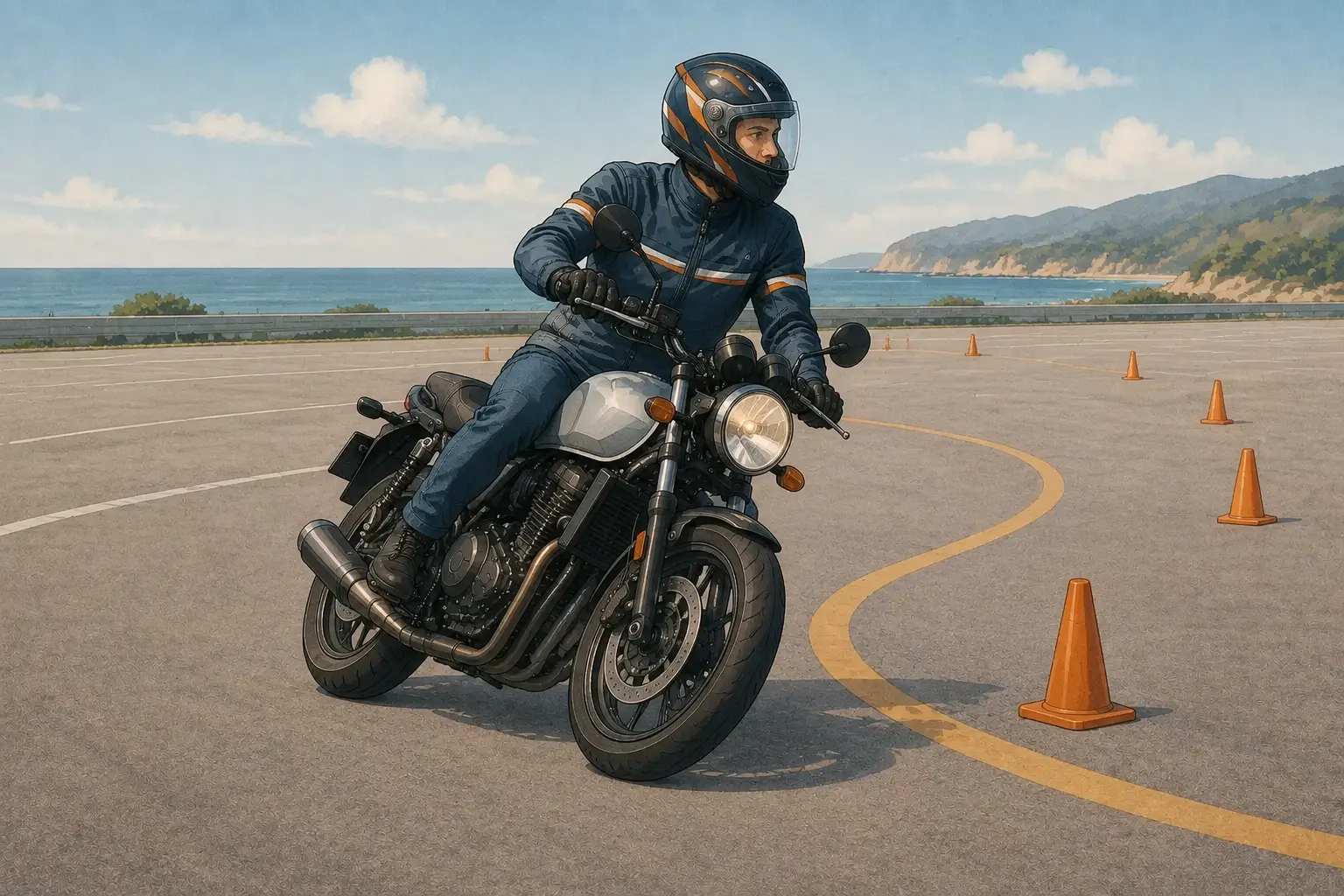
Vision gives the turn a destination
Your eyes scan, your head turns, and your hands guide. Looking through the curve gives your brain the information it needs to make smooth steering and speed adjustments.
Choose a safe entry speed while the motorcycle is upright. Finish major braking before you ask the tires to turn.
Turn your head and eyes toward the path and exit - not down at the front wheel or at the thing you fear hitting.
At riding speed, a brief forward pressure on the handgrip in the direction of the turn initiates lean: press left to go left, press right to go right.
Use a light, steady maintenance throttle through a gentle curve. Make changes smoothly so the chassis remains settled.
Interactive vision lab
Choose where the rider looks. The simple diagram shows why a useful target is farther through the turn - not directly in front of the tire.
Where should the rider look?
Big, easy training-lot turns
Start with a large oval or gentle corner at a coached pace. Give yourself time to separate looking from steering.
Before entering, check the surface, space, curve direction, and exit. Do not fixate on one cone.
Slow while upright. Choose a gear that lets the engine respond smoothly without racing or lugging.
Point your chin toward the path you want. Keep moving your eyes toward the exit as the motorcycle progresses.
At riding speed, use light pressure on the inside handgrip to begin and adjust lean. Keep your shoulders and elbows relaxed.
A small, steady roll helps the motorcycle remain settled. Avoid abrupt mid-turn changes.
As the curve opens, look farther ahead, reduce steering pressure, and smoothly accelerate only when the path is clear.
Coach's notes
These are the details beginners often miss when they only memorize the steps.
During parking-lot manoeuvres, steer the handlebars toward the turn and use balance controls. The motorcycle and your body may lean differently.
A brief pressure on the left grip makes the motorcycle lean left; pressure on the right grip makes it lean right. This is often called countersteering.
Body position can influence balance, but deliberate handgrip pressure gives the motorcycle a precise steering input.
If a hazard catches your eyes, deliberately move your gaze to the open escape path. Your best steering information is where you want to go.
Troubleshooting
Use the symptom as feedback. Reset safely, change one thing, and try again.
Name a new target in the open path and turn your chin toward it. Replace “don’t hit that” with a visible place to go.
Do your slowing earlier, while upright. A calmer entry gives you time to look, steer, and maintain a settled throttle.
Grip the tank lightly with your knees, soften your elbows, and let the handlebars move without fighting them.
For a larger change of direction, rotate your head as well. Pointing your chin through the curve makes the target easier to keep in view.
Abrupt braking uses traction quickly and can upset the motorcycle. Plan speed early; if braking becomes necessary, be smooth and reduce lean when space permits.
Three-question check
Tap an answer. The explanation appears immediately.
Learn the sequence slowly in a generous practice space before asking for tighter or faster turns.