Left hand
Clutch lever
Blends engine power into the rear wheel for the start, then disconnects power before the engine struggles at a stop.

 MOTORCYCLE TRAINING · VICTORIASee dates ↗
Lesson 03 Smooth beginnings and endings
A calm ride begins with an organized launch and finishes with an organized stop. Learn what each hand and foot does - and when it does it.
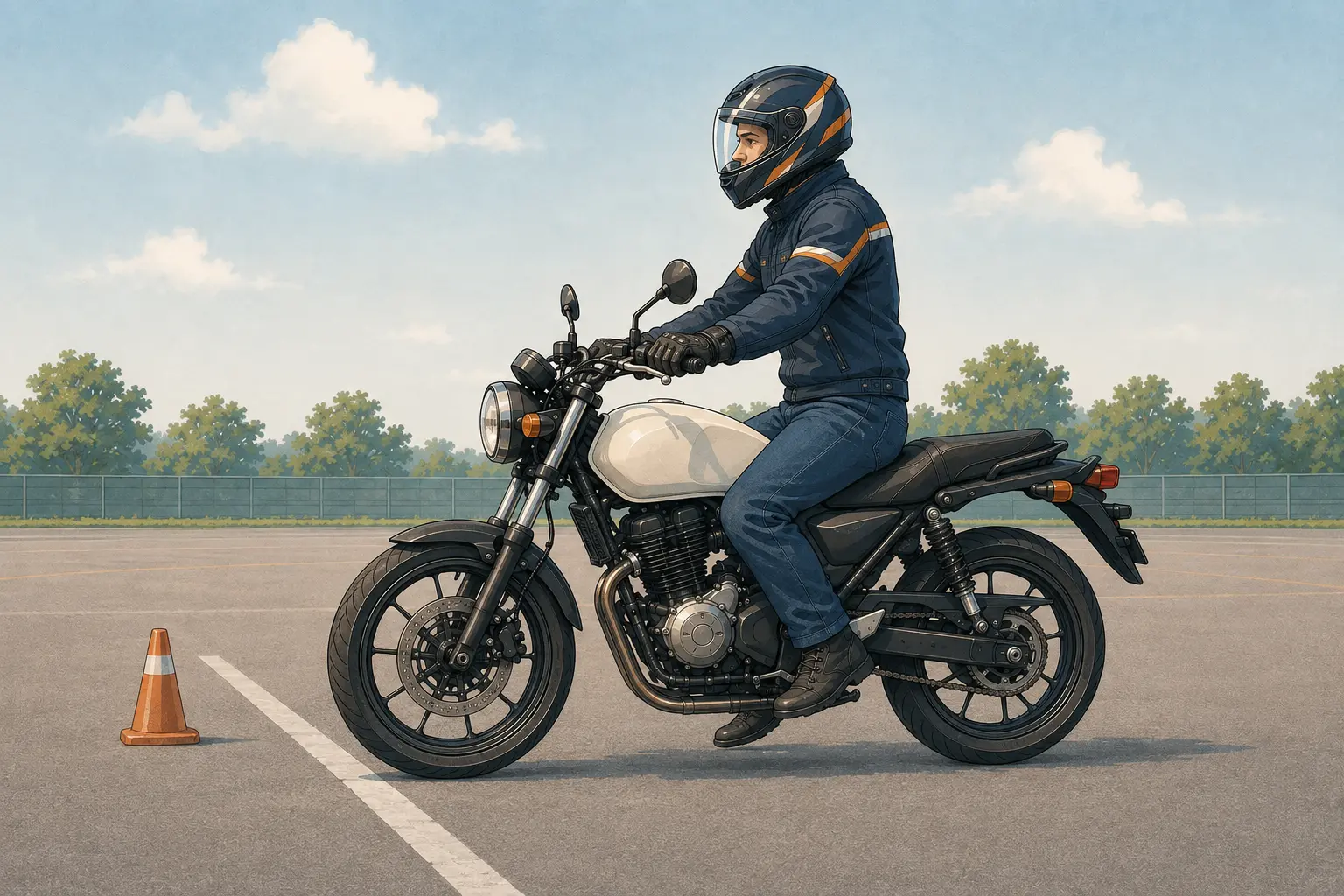
First, meet the whole team
Starting and stopping is not one movement. Your hands and feet perform small jobs in a useful order, while your head stays up and plans ahead.
Blends engine power into the rear wheel for the start, then disconnects power before the engine struggles at a stop.
The throttle supplies a small, steady engine speed. The separate front-brake lever adds smooth stopping pressure.
Select first before moving. As you slow to stop, return to first so the motorcycle is ready to move again.
Adds controlled braking and can help keep the motorcycle settled as you finish a normal stop.
Interactive sequence coach
Choose Start or Stop, then step through the routine. Say each action out loud until the order feels predictable.
Clutch fully in, first gear selected, front wheel straight, eyes up.
The complete parking-lot drill
Use a long, empty straight path. Accuracy matters more than distance or speed.
Clutch fully squeezed, first gear selected, front wheel straight, both feet down, clear path ahead.
Use idle or a small, steady throttle as your instructor and motorcycle require - never a big nervous rev.
Ease to the friction zone. Pause at the first pull, then let the motorcycle gain balance before fully releasing the clutch.
Roll off the throttle. Keep your eyes up and the motorcycle upright and straight.
Squeeze the front brake and press the rear brake progressively. Build pressure instead of grabbing or stomping.
Squeeze the clutch before the engine lugs or stalls, downshift to first, and place a foot down as the motorcycle stops.
Coach's notes
These are the details beginners often miss when they only memorize the steps.
Do not rush them onto the pegs, but do not paddle along. As the motorcycle rolls steadily, bring both feet up.
At a normal stop, the left foot can support the motorcycle while the right foot remains available for the rear brake. Conditions and motorcycle design can change the best choice.
Being in first avoids a last-second gear search and keeps the motorcycle ready to move when it is safe.
First build repeatable normal stops. Practise emergency braking only in a coached, closed training area.
Troubleshooting
Use the symptom as feedback. Reset safely, change one thing, and try again.
The clutch probably moved through the friction zone too quickly, or the engine needed slightly more steady throttle. Squeeze, reset, and slow the blend.
Too much throttle or an abrupt clutch release can make the start jumpy. Calm the throttle and pause at the first pull.
Look farther ahead, square the handlebars, and finish braking progressively. Looking down often makes the final metre less stable.
Squeeze the clutch earlier - before road speed becomes too low for the selected gear.
Keep both feet on the pegs while the motorcycle is still moving steadily. Put a foot down only as the stop is completed.
Three-question check
Tap an answer. The explanation appears immediately.
Understand the order here, then make it physical with a patient coach and a closed practice area.